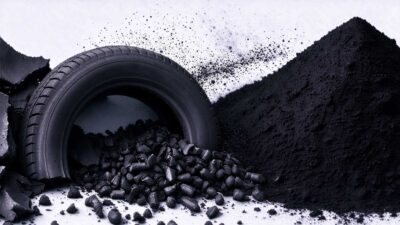
The throughput of JACAN rCB (recovered carbon black / tire pyrolysis char) processing lines is highly dependent on target particle size, feed moisture, ash content, and selected mill type. JACAN offers modular, customizable systems ranging from pilot scale to full industrial continuous production.
1. JACAN Fluidized Bed Opposed Jet Mill (Premium ultra-fine rCB, D97 <10 μm)
This is the preferred system for high-value tire-grade rCB with strict low-metal contamination requirements.
- Pilot models: 50 – 200 kg/h
- Standard industrial models: 200 – 800 kg/h
- Large customized jet mill lines: 800 – 1200 kg/h
Note: Output drops significantly when targeting D97 <6 μm due to higher classification cut point and repeated particle recirculation.
2. JACAN ACM Classifier Mill (General industrial rCB, D97 10–25 μm)
For cost-sensitive bulk filler grades with medium fineness requirements, ACM systems deliver much higher hourly capacity.
- Small ACM units: 0.5 – 1 t/h
- Mid-size production lines: 1 – 3 t/h
- Large-scale multi-module ACM lines: 3 – 6 t/h
This is the most economical choice for high-volume rCB filler production where ultra-low metal contamination is not mandatory.
3. Full Turnkey rCB Processing Line (complete system including pre-crushing, magnetic separation, drying, grinding, classification, dust collection and packaging)
- Pilot line: 50–200 kg/h finished rCB
- Standard commercial line: 0.5–2 t/h finished powder
- Large customized production line: 2–6 t/h finished rCB
Key Factors That Reduce Actual Capacity
- Fineness target: Finer PSD (smaller D97) lowers throughput substantially.
- Feed moisture: Moisture >2% causes agglomeration and reduces effective output.
- Feed impurity level: High steel wire, ash or oversized chunks increase pre-treatment load and create bottlenecks.
- Contamination control: Ceramic-lined low-wear configurations reduce throughput slightly vs standard carbon steel liners.
JACAN does not use fixed one-size capacity figures. All rCB grinding and classification lines are engineered to match your required PSD, metal impurity limits, and hourly tonnage. For tire-grade ultra-fine rCB, typical stable output is 200–800 kg/h. For industrial filler rCB, ACM-based lines can reach up to 6 t/h.